
Urapuntja Mobile Clinic
$332k secured

Challenge
Urapuntja Health Service delivers primary care across 16 homelands spread over a wide stretch of the Utopia region. For people living out on those homelands, reaching a clinic means travel, and travel is often the reason care gets delayed or missed entirely.
A leased mobile clinic had already tested the alternative of taking the service to where people live. It worked. Demand was strong, the model fitted how people actually move around the homelands, and it proved culturally appropriate in a way a fixed clinic could not be. But the vehicle was leased, the arrangement temporary, and none of it was built for the conditions it was working in.
The task was turning a proven trial into a permanent asset that UHS owned outright.
Approach
We worked with UHS to translate the service model, and the lessons from the leased clinic, into a fundable project. That meant defining the clinical and operational scope first, then building the project plan, budget, procurement schedule and risk controls around it.
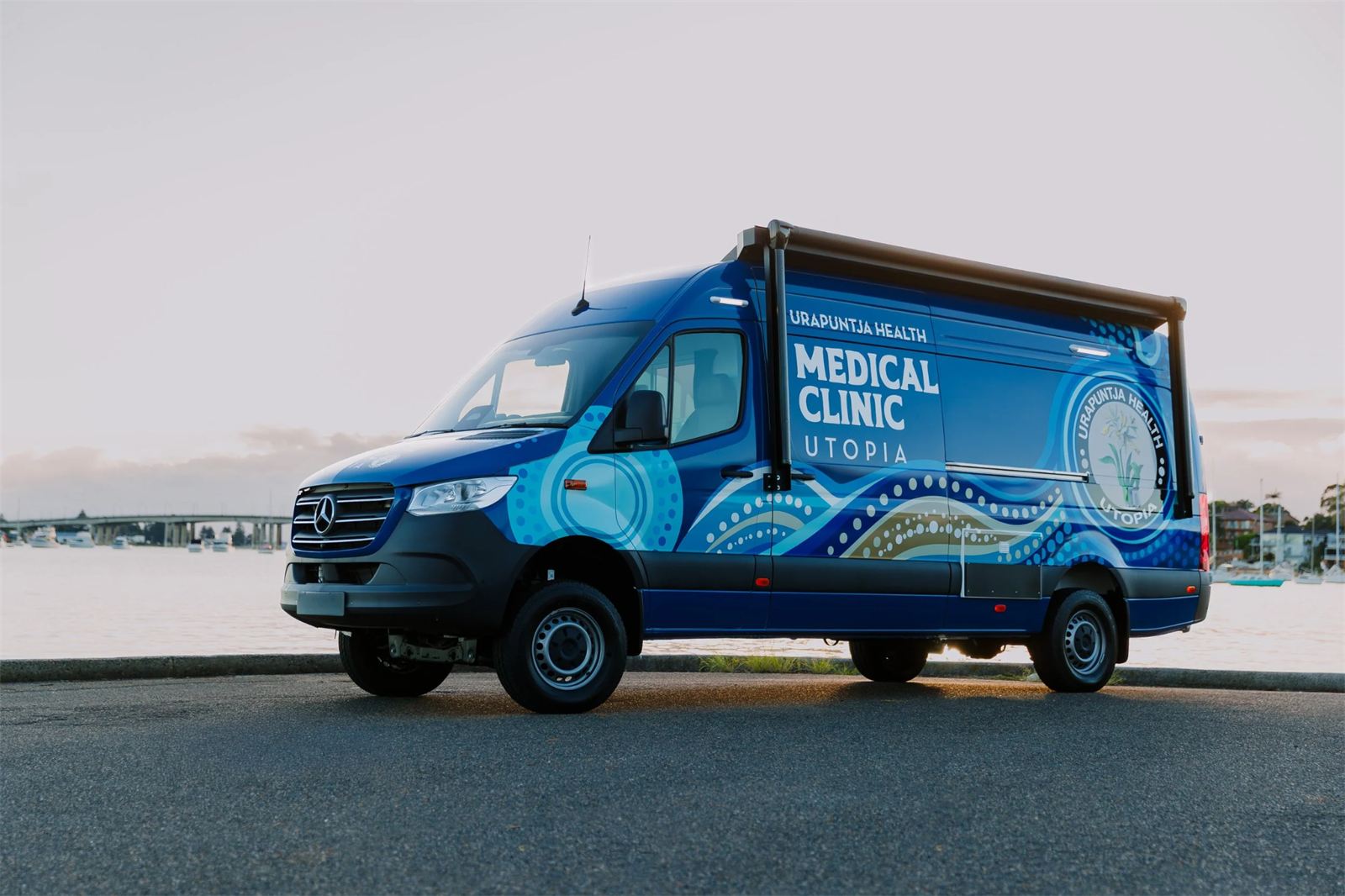
Much of the work was arguing for specificity. A standard vehicle or a conventional clinic model would not survive the homelands, and the application had to demonstrate that in concrete terms rather than assert it. We coordinated specialist supplier quotes and technical detail, and set out community demand, organisational capability and long-term financial sustainability alongside the capital ask.
- Grant application
- Clinical and operational scope
- Budget and procurement schedule
- Risk controls
- Supplier coordination
Outcomes
Funding was approved in July 2025 for a purpose-built four-wheel-drive Sprinter with a specialist medical fit-out: two clinical areas, integrated telehealth cameras, fixed and portable vital-sign monitoring, and off-grid power, water and climate control. UHS put in $100,000 towards initial operating costs, so the service was funded to run rather than simply to exist.
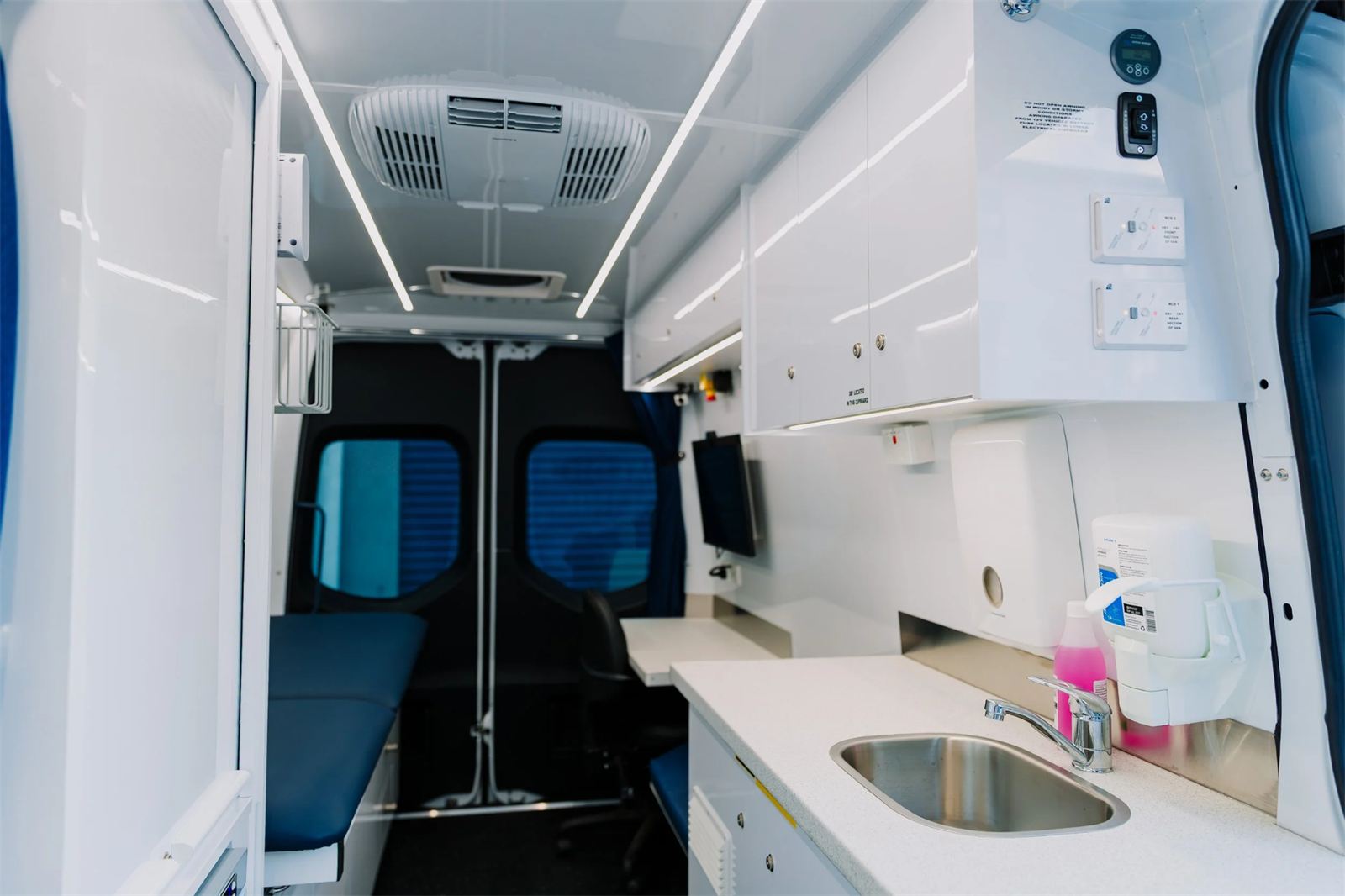
The clinic carries chronic disease care, maternal and child health services, immunisations, preventative programs and urgent care out to the homelands, and its telehealth systems bring specialists in without anyone having to travel.